


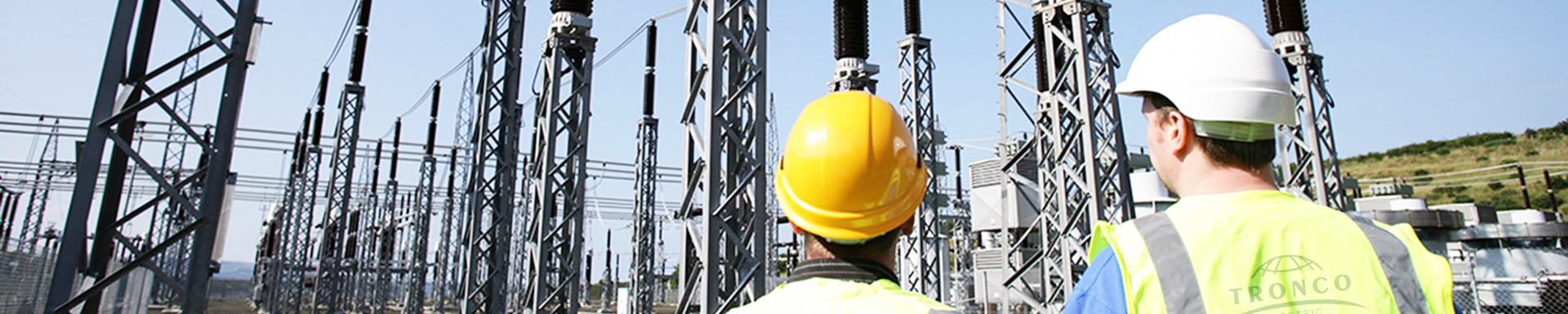
Grading Rings, Shield Rings, and Grading-Shield Rings: The "Silent Guardians" of High-Voltage Electricity
2026-02-23 22:23Perched on transmission towers hundreds of meters high, unassuming metal rings work tirelessly to eliminate the faint blue crackle of power arcs on the urban fringe at night and ensure the clarity of your mobile phone and radio signals.
"Look at that thing, shaped like a bicycle wheel—that's a grading-shield ring," explained a technician during an inspection of an ultra-high voltage (UHV) transmission line, pointing to the end of an insulator string. "Without it, the neighbors would be in for some serious noise."
In high-voltage power systems, an invisible "power thief" lurks: corona discharge. When voltages reach 330kV and above, the electric field intensity on the surface of conductors, insulators, and hardware becomes extremely high. It ionizes surrounding air molecules, producing a faint blue glow and a characteristic "hissing" sound. This phenomenon not only continuously wastes energy—an untreated 500kV insulator string can waste nearly a hundred yuan in electricity per year—but also generates significant radio interference, particularly disrupting the medium-wave broadcast band.
01 Meet the Three Types of Rings
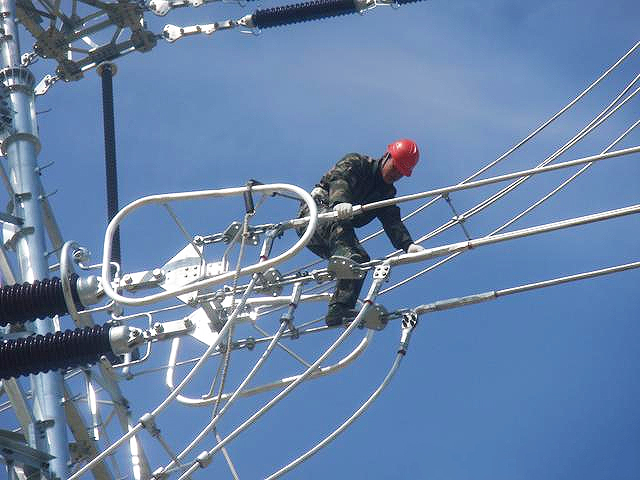
Three common types of metal rings are found on high-voltage lines, each with a specific role, though they often work in concert. To understand their differences, one must first grasp the source of corona discharge.
Under high voltage, the voltage distribution across an insulator string is highly uneven, forming a "U" shape—the insulators at the ends bear a much higher voltage than those in the middle. The first insulator at the conductor end is often the weakest link in the entire string. Simultaneously, metal fittings (hardware) like clamps, suspension brackets, and bolts frequently have sharp edges where the electric field concentrates abnormally, easily triggering corona.
Engineers designed different types of protective rings to tackle these two distinct sources of corona:
Grading Rings primarily control corona on the insulators. Installed on the conductor side, they increase capacitive coupling between the conductor and the insulator string, making the voltage distribution more uniform. They can effectively reduce the voltage stress on the first insulator from potentially over 15% to about 7.8%.
Shield Rings primarily control corona on the hardware. Mounted around fittings (especially tension clamps), they use smooth, rounded surfaces to cover or replace sharp edges, ensuring a uniform electric field and preventing local high field strength that leads to corona.
Grading-Shield Rings combine the functions of both. Typically used in spaces with limited room or on structurally complex parts, they serve a dual purpose: optimizing voltage distribution across insulators while shielding sharp hardware components.
02 Material Evolution & Structural Innovation
Though seemingly simple, these protective rings have undergone decades of optimization in materials and structure.
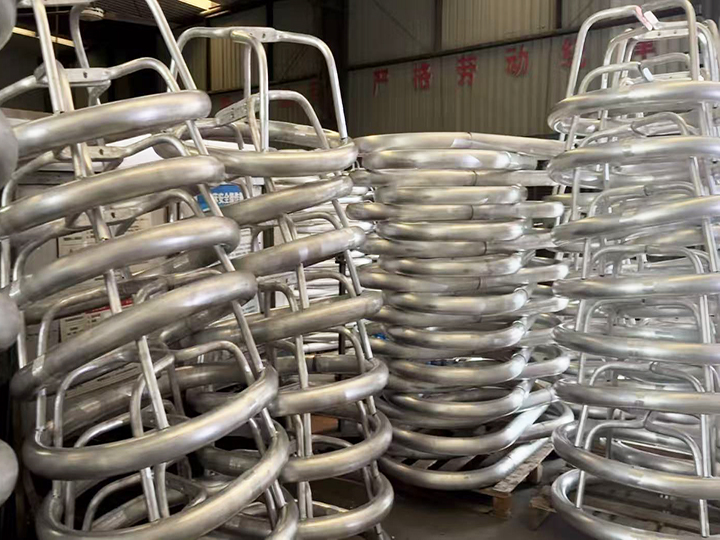
Early products were often made from hot-dip galvanized steel pipes, which offered high strength but involved complex manufacturing. A tricky problem: during hot-dip galvanizing, the air inside the sealed pipe would expand when heated, potentially causing an "explosion," necessitating pre-drilled vent holes.
As technology advanced and costs shifted, aluminum gradually became the mainstream material. Compared to steel, aluminum rings offer multiple advantages: significantly lighter weight, reducing tower load; better electrical conductivity; and superior corrosion resistance without needing galvanizing.
Structural design has also become more user-friendly. To facilitate installation and maintenance, modern grading rings often feature an open design—the ring isn't completely closed but has a gap of about 100 mm. This allows maintenance crews to remove the ring by passing it over the hardware without needing to disconnect the conductor.
03 Applications & Technical Requirements
These protective fittings are primarily used on 330kV and above EHV/UHV transmission lines and substations. The higher the voltage, the stricter the requirements for corona control.
The placement of grading rings is critical. They are generally recommended to be installed level with the porcelain skirt of the second insulator. If positioned too low, the grading effect is insufficient; if too high, it might compromise insulation strength. Accurate placement on a 500kV line can effectively reduce the voltage on the first insulator from potentially over 15% to about 7.8%, significantly raising the corona inception voltage of the entire string.
The mechanical strength of these rings is also vital. Design specifications require them to withstand a static mechanical load of at least 1000N (roughly equivalent to the weight of an adult), ensuring they are safe for installation and inspection personnel to handle.
04 Quality Control & Performance Testing
To guarantee the reliable operation of these "silent guardians," the power industry has established strict quality control systems. The primary basis is the industry standard for Grading Rings, Shield Rings, and Grading-Shield Rings (DL/T 760), with the latest version released in 2025, set to take effect on March 28, 2026.
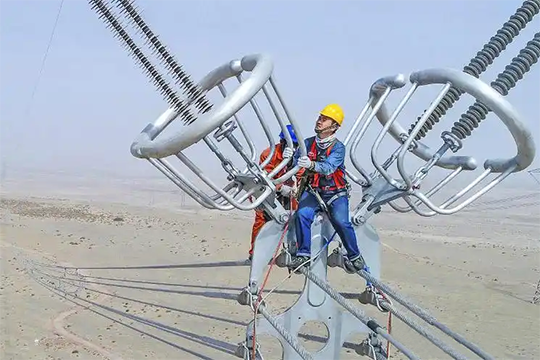
Corona and radio interference tests are central. During these tests, the protective ring is assembled with the insulator string, and under simulated operating voltage, inspectors observe for any visible corona and measure radio interference levels.
Mechanical performance testing is equally critical, including destructive load tests (applying 1.2 times the rated load) and vibration fatigue tests, ensuring the fittings won't loosen or fail under harsh conditions like strong winds.
For metal components, corrosion resistance directly impacts service life. Galvanized layer thickness, adhesion, and resistance to salt spray corrosion all require specialized testing. Surface finish during manufacturing is paramount—any burr, pit, or sharp edge can become a corona "ignition point," making "smooth and burr-free" the most fundamental requirement.
Following the upgrade of a 500kV line in Zhejiang Province, nearby residents noticed the nighttime "buzzing" sound had vanished, and their radios became clearer. They were unaware that the change originated from the unassuming aluminum rings at the ends of the insulator strings.
Line inspectors meticulously check every grading ring via drone camera, ensuring correct positioning and intact surfaces. "These little things might not look like much, but they play a huge role," one inspector remarked, pointing to a clear ring image on the monitor. "They are the silent guardians of the modern power system, allowing high-voltage electricity to be transmitted efficiently while coexisting harmoniously with the environment."